Hear This: New Jersey's Sonic Experimentalists Are Turning Sound Itself Into the Art
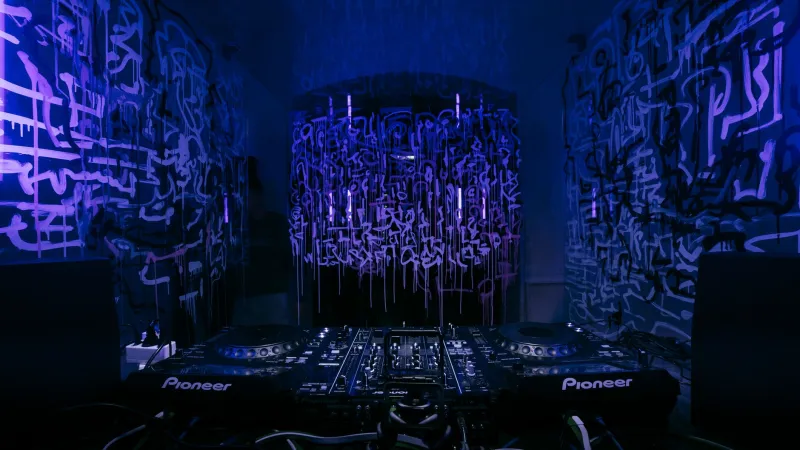
There's a room in a converted warehouse space in Jersey City where nothing plays and everything sounds. Walk in, and you're immediately wrapped in something between a drone and a breath — low, warm, shifting. There's no stage. No performer. No set time when it starts or stops. Just sound, moving through the space like weather. Most people stop talking the moment they step inside. A few of them cry.
This is what experimental sound art looks like in New Jersey right now, and it's a lot more alive than you'd expect.
While the state's music scene gets plenty of ink — the indie labels, the basement venues, the classical rebels — there's a parallel world quietly taking shape in galleries, public plazas, and repurposed industrial spaces from Newark to Asbury Park. A growing community of sound designers, composers, and audio artists is doing something that defies easy categorization. They're not making music, exactly. They're building sonic environments. And people are showing up.
What Even Is Sonic Art?
Fair question. The short answer: it's art where sound is the primary medium, not a soundtrack or a score, but the actual thing you're experiencing. Think of it less like a concert and more like a sculpture you can't see — one that shifts depending on where you stand, how long you stay, and even what the weather is doing outside.
The longer answer is that sonic art has deep roots, stretching back to John Cage's 4'33" and the musique concrète experiments of mid-20th century Europe. But what's happening in New Jersey right now feels distinctly local, distinctly urgent, and frankly, distinctly unpretentious. These artists aren't interested in academic gatekeeping. They want people to feel something.
"I didn't come up through conservatories," says one Newark-based sound artist who builds site-specific audio installations using field recordings, synthesizers, and custom-built speakers. "I came up through punk shows and community radio. The goal was always the same — make something that hits people somewhere real."
The Venues That Make It Possible
One of the most interesting things about New Jersey's sound art scene is where it's happening. Not in the places you'd expect.
Galleries in Asbury Park have started dedicating full rooms to audio-only installations, dimming the lights and asking visitors to sit with the sound for as long as they want. Public libraries in Montclair and New Brunswick have hosted listening events that draw crowds who'd never identify as "art people." A former textile factory in Paterson recently served as the backdrop for a month-long sound installation that used the building's own acoustic architecture — its echoes, its hums, its creaks — as part of the work itself.
Then there are the genuinely unexpected spaces. Parking structures, train station underpasses, community gardens at dusk. Sound artists are drawn to these places because they already have a sonic identity — ambient noise, natural reverb, the particular texture of how a city breathes at different hours. The art doesn't impose on the space. It listens to it first.
"New Jersey has this incredible sonic landscape that people tune out," says one Hoboken-based artist whose recent project involved binaural recordings made along the Hudson River waterfront at 3 a.m. "The industrial hum across the water, the trains, the way sound bounces differently when it's cold. I just want people to actually hear what's already there."
Blurring Every Line
What makes this scene genuinely exciting — and a little hard to write about — is how deliberately it resists definition. Is a two-hour drone composition performed in a gallery a concert? Is a sound installation that responds to foot traffic a sculpture? Is a curated listening session in a park a performance?
The artists themselves tend to shrug at these questions, which is probably the right answer. The categories matter less than the experience. And the experience, by almost every account from people who've stumbled into these events, is striking.
Part of that is neurological — sustained, immersive sound affects the brain differently than music you're passively hearing in the background. Slow-moving tones and carefully layered textures can induce something close to a meditative state. But part of it is also social. These events tend to be quiet, attentive, communal in a way that's become rare. People put their phones away. They make eye contact with strangers. They stay longer than they planned.
"I've had people tell me they haven't been that still in years," says one artist based in Red Bank who creates sound pieces using water, contact microphones, and live processing. "That's not about me or my work. That's about giving people permission to just be somewhere for a minute."
Who's Actually Showing Up
Here's the part that might surprise you: the audiences for these events are genuinely mixed. Yes, there are the expected art-world regulars, the music nerds, the experimental-curious. But there are also retirees who wandered in off the street. Parents who brought their kids. People who heard about it through a neighborhood Facebook group and thought, why not.
That accessibility — which is partly intentional, partly a product of where these events are held — is one of the most compelling things about what's happening. Experimental sound art has a reputation for being alienating, difficult, designed for a self-selecting in-crowd. The New Jersey version of it seems to be actively pushing against that.
Many of these artists price their events on a sliding scale or make them free entirely. Several have partnered with community organizations, schools, and local libraries specifically to reach people who don't have a relationship with the traditional arts world. The work is challenging, but the welcome mat is out.
The DIY Infrastructure Behind It
Like so much of what's thriving in New Jersey's creative landscape, this scene runs on hustle and mutual support. There's no major institution backing most of it. There are informal networks of artists sharing equipment, venues, and audiences. There are small grants from state arts councils and local foundations. There are artists who teach by day and build speaker arrays by night.
Social media has helped — short video clips of immersive sound environments travel surprisingly well on Instagram and TikTok, which has brought new audiences to events that would otherwise rely entirely on word of mouth. But the scene's real connective tissue is relational. People know each other. They show up for each other's work. They argue about aesthetics over bad coffee and then collaborate anyway.
It's a community, in the fullest sense of the word.
Why It Matters Right Now
There's something almost countercultural about the act of asking people to slow down, close their eyes, and listen — really listen — in 2024. In a media environment built entirely around stimulation and speed, the offer of sustained, unhurried sonic experience is genuinely radical. Not in a manifesto-waving way. Just quietly, stubbornly radical.
New Jersey's sound artists aren't trying to compete with stadium shows or streaming algorithms. They're offering something those things can't: presence. The irreplaceable, unrepeatable experience of being in a specific place, at a specific moment, with sound moving through the air around you.
That might sound simple. But walk into one of these rooms, stand still for a few minutes, and let it work on you. Simple is doing a lot of heavy lifting here.
Keep an eye on community boards and local gallery listings across the state — these events often appear with minimal fanfare and disappear just as quietly. That's kind of the point. You have to show up to hear it.