Still Rolling: Why New Jersey's Independent Recording Studios Are More Essential Than Ever
There's a moment every musician knows — that specific, slightly terrifying second when the talkback crackles and the engineer says, "Okay, we're rolling." It doesn't happen the same way at home. It doesn't happen through a plugin or a YouTube tutorial. It happens in a room, with other people, under a kind of productive pressure that has been quietly disappearing from the cultural landscape for years.
Except in New Jersey, where a handful of scrappy, passionate, and occasionally ornery studio operators are refusing to let it go.
The Bedroom Production Boom (And Its Limits)
Let's be honest about what home recording has done for music. It's democratized the whole thing in ways that feel genuinely revolutionary. A teenager in Trenton with a decent interface and a borrowed condenser mic can make something that sounds competitive with major-label output. That's not nothing — that's everything, actually, for a generation of artists who couldn't have afforded studio time even a decade ago.
But somewhere in that democratization, something got lost. The accidental conversation between a bassist and a producer that unlocks a whole new direction for a record. The engineer who's worked the same SSL console for twenty years and knows exactly what it wants. The live room with a ceiling height that gives a drum kit a sound you could never fake with reverb plugins.
New Jersey's independent studio community has spent the last several years quietly building a case that these things still matter — and they're starting to win the argument.
Rooms With a Past
Some of Jersey's studios carry weight just from their walls. Walk into a place like Lakehouse Recording Studios in Asbury Park and you're stepping into a space that's absorbed decades of serious creative work. The gear is real, the acoustics are intentional, and the staff have seen enough sessions to know when an artist is close to something special and when they're spinning their wheels.
That institutional knowledge is harder to quantify than a spec sheet but it's arguably the most valuable thing a studio can offer. Engineers and producers who've been in the room for hundreds of sessions develop a kind of intuition that no plugin emulation has figured out how to bottle yet.
There's also the question of legacy — of what it means to record in a space where other artists have done serious work. It sounds a little mystical, but working musicians will tell you it's real. There's something about knowing a room has heard things worth hearing that changes how you approach your own session.
The New Wave: Scrappy, Smart, and Community-Focused
Then there are the newer operations, and honestly? They might be the most interesting part of this story.
Across the state — in cities like Newark, New Brunswick, and Paterson, in suburban spaces that used to be something else entirely — a new generation of studio owners is building something different from the classic model. These aren't facilities chasing major-label clients or competing on gear lists alone. They're positioning themselves as community infrastructure.
Think affordable day rates specifically designed for local artists. Think open sessions where producers and vocalists who've never met can get in a room together. Think mentorship pipelines where younger artists learn the craft from engineers who actually want to teach it. Some of these spots are running workshops, hosting listening sessions, building the kind of ecosystem around their physical space that makes them feel less like a service business and more like a cultural institution.
It's a smart adaptation. If you can't out-spec a home studio on pure technical grounds, you offer something a home studio structurally cannot: other people.
Collaboration as the Core Product
Ask any artist who's made the shift from bedroom production to studio time what surprised them most, and the answer is almost always the same: the collaboration. Not just between the artist and the engineer, but the way a physical space seems to generate creative accidents that a solo home session never does.
In a real room, you're accountable to other people's time and energy in a way that changes your relationship to the work. You make decisions. You commit to takes. You hear things through monitors in an acoustically treated space and realize your mix has been lying to you for weeks. And sometimes — often, actually — someone else in the room hears something in your track that you've been too close to notice.
Jersey's studio community is leaning hard into this reality. Several studios have started actively facilitating what they're calling "creative matchmaking" — pairing artists with producers or collaborators they might never have found on their own. It's part business strategy, part genuine community investment, and it's working.
Sonic Character You Can't Fake
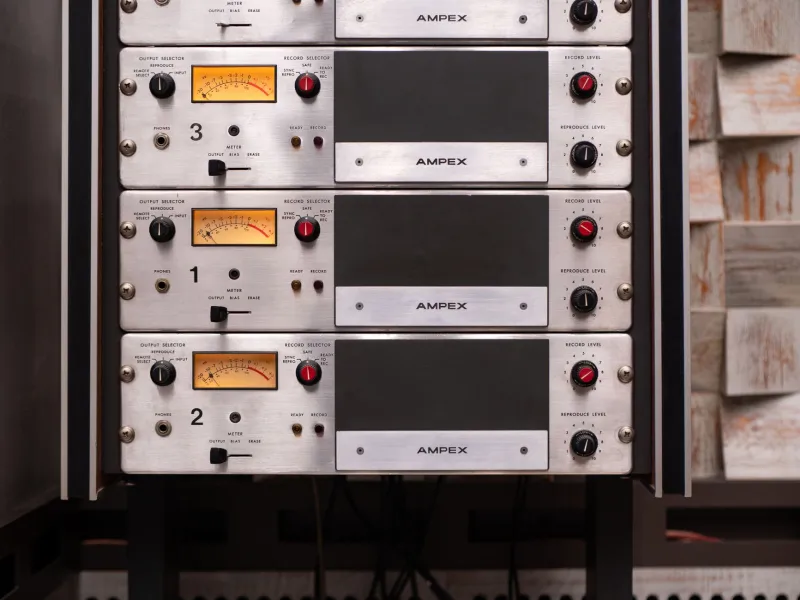
Here's the technical argument, for anyone who needs it: rooms sound like themselves. The dimensions, the materials, the air — all of it contributes to a sonic character that gets captured in the recording whether you're thinking about it or not. Vintage outboard gear colors sound in ways that are genuinely difficult to replicate after the fact. A great microphone in a great room on a great day produces something that even the most sophisticated software emulation is still chasing.
New Jersey has some genuinely exceptional rooms. Spaces with live rooms that can handle a full rhythm section and still sound musical. Control rooms that have been tuned by serious acousticians. Vintage consoles maintained by people who treat them like the instruments they are. This stuff exists here, and it's accessible in a way it isn't in New York, where the overhead alone prices most independent artists out of the picture before they even book a session.
That's actually Jersey's competitive advantage in the current landscape: serious infrastructure at prices that don't require a label deal to afford.
What Comes Next
Nobody's pretending the economics are easy. Studio real estate costs money, gear costs money, skilled staff costs money. The artists who most need access to these spaces are often the ones with the least financial flexibility. The tension between sustainability and accessibility is real, and the studios navigating it most successfully are the ones being honest about it — experimenting with sliding scale rates, residency programs, and community partnerships that spread the cost without gutting the quality.
What's clear is that the studios making it in New Jersey right now aren't surviving despite the bedroom production era. They're thriving because of it — because they've figured out that the answer to democratization isn't to compete with it, but to offer what it can't.
A room. A community. A reason to get out of the house and make something with other people.
In Jersey, that's still plenty.