When the Art Scene Blows Up Your Neighborhood: The Price of Jersey's Creative Renaissance
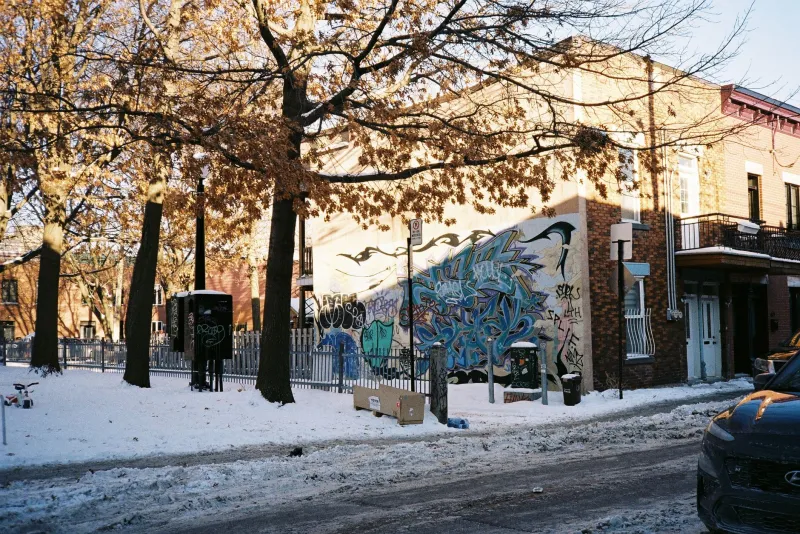
There's a cruel irony baked into almost every arts revival story in America, and New Jersey is living it out in real time. A neighborhood gets overlooked, rents stay cheap, artists move in, something magic happens — and then the very magic they created becomes the thing that destroys the community they built.
It's happening in Asbury Park. It's happening in Jersey City's Bergen-Lafayette. It's creeping into parts of Paterson and Trenton that were, until recently, invisible to anyone with a development budget. And the people caught in the middle — painters, muralists, musicians, ceramicists, theater makers — are being asked to celebrate a cultural moment they can't actually afford to participate in anymore.
The Boom Is Real, and So Is the Damage
Let's be clear: New Jersey's arts scene genuinely is thriving. State and municipal arts funding has ticked upward over the past few years. Galleries that once struggled to fill a Friday opening now have waitlists. Developers are pitching mixed-use spaces with "artist live-work units" as a selling point. That's not nothing.
But Marisol Oquendo, a textile artist who has lived and worked in Asbury Park for nearly fourteen years, doesn't feel like she's winning. "I watched this town become what it is," she says, standing in the studio she's about to vacate. "I was here when nobody wanted to be here. And now I can't afford a one-bedroom."
Her rent doubled in three years. The building she worked out of — a former factory space that housed six artists — was sold to a boutique hotel developer in 2023. She's currently splitting a space in Neptune with two other artists, a 40-minute commute from the beach community she helped transform.
This pattern — artists as unwitting pioneers for capital — has a long academic history. Scholars have been writing about it since the SoHo loft boom of the 1970s. But knowing the history doesn't make the displacement any less real for the people living it.
Developers Aren't All Villains (But the System Kind of Is)
It's tempting to cast this as a simple good-versus-evil story, but the reality on the ground is messier. Some developers in New Jersey are genuinely trying to do right by the artists whose neighborhoods they're entering. Others are using the language of cultural investment to dress up straightforward profit-seeking. The hard part is that both can be true at the same time.
Daniel Ferreira has developed three mixed-use properties in Jersey City over the past decade, two of which include below-market studio spaces for working artists. He bristles at being painted as the bad guy. "I've subsidized studios that have cost me real money," he says. "But I also have investors, and I have mortgages. I can't run a charity."
His point is legitimate, and it gets at the core problem: without structural support — from city governments, state arts agencies, or dedicated community land trusts — individual developers can't be expected to solve a systemic issue on their own. The math just doesn't work.
What does work, at least partially, are models that take real estate out of the speculative market entirely. The Artspace model, pioneered in Minneapolis and replicated in a handful of cities, creates permanently affordable artist housing by using a nonprofit ownership structure. New Jersey has been slow to adopt it, but advocates are pushing hard.
The People Trying to Thread the Needle
In Trenton, a coalition of artists and community organizers called Creative Ground NJ has spent the last two years mapping every artist-occupied space in the city — studios, rehearsal rooms, informal galleries, backyard sculpture spaces — with the explicit goal of getting protective zoning in place before the wave hits. "We've watched what happened in Asbury, in Jersey City," says coalition co-founder Denise Whitaker. "We're not waiting to react. We're trying to get ahead of it."
Their approach includes pushing for a city ordinance that would require any development receiving public subsidy to include a percentage of permanently affordable creative workspace. It's modeled loosely on inclusionary zoning for residential housing, and it's already facing pushback from the development community.
In Paterson, the conversation is slightly different. There, the arts community is more tightly woven into immigrant neighborhoods — Dominican, Peruvian, West African — where cultural production isn't just a career, it's a form of community preservation. Artists there are less worried about being priced out of studios and more worried about their entire neighborhoods being repositioned for a demographic that doesn't look like them.
"When they say 'revitalization,' ask yourself: revitalized for who?" says Kwame Asante, a visual artist and community organizer in Paterson's Eastside neighborhood. "Because my neighbors have been here for twenty years. We don't need to be revitalized. We need to be protected."
What Solutions Actually Look Like
Across New Jersey, a few interventions are showing real promise — not as silver bullets, but as pieces of a larger puzzle.
Community Land Trusts remove property from the speculative market permanently, allowing artists to own or lease spaces at rates tied to income rather than market value. Montclair and Newark both have nascent CLT efforts that include cultural space components.
Right of First Refusal Laws give existing tenants — including artists in commercial spaces — the opportunity to purchase their buildings before they go to market. New Jersey's legislature has explored versions of this for residential tenants; advocates want it extended to creative workspaces.
Cultural District Designations can be double-edged (more visibility sometimes means more gentrification pressure), but when paired with anti-displacement protections, they can create a legal framework for preserving affordability in high-demand areas.
Artist Preference Policies in subsidized housing programs give working artists priority access to affordable units — a model used in cities like San Francisco and Seattle that New Jersey has not yet widely adopted.
None of these solutions are magic. All of them require political will, sustained funding, and community organizing to actually stick. And all of them are happening against a backdrop of a state housing market that is, by almost any measure, broken.
The Conversation NJ Needs to Have
What's striking, talking to artists across the state, is how few of them want to abandon New Jersey. That's worth sitting with for a second. These are people who could theoretically chase cheaper rents in other states, or pivot to remote work, or stop making art altogether. Most of them aren't doing any of those things. They're fighting for the right to stay in communities they love, making work that reflects those communities back to themselves.
"I'm not going anywhere," says Marisol Oquendo, even as she packs up the last of her looms. "This is my home. I'm just going to keep making noise until someone in city hall actually listens."
The cultural boom in New Jersey is real, and it deserves to be celebrated. But a boom that bulldozes the people who sparked it isn't a renaissance — it's a real estate transaction dressed up in gallery lighting. The question isn't whether New Jersey can have thriving arts communities. It clearly can. The question is whether the people who built those communities get to live in them.
That answer isn't written yet. But it's being fought over, right now, in studios and city council chambers and community meetings across the state. And the outcome is going to say a lot about what kind of place New Jersey actually wants to be.