Gone But Not Gone: How NJ-Born Artists Are Changing the State's Culture From a Distance
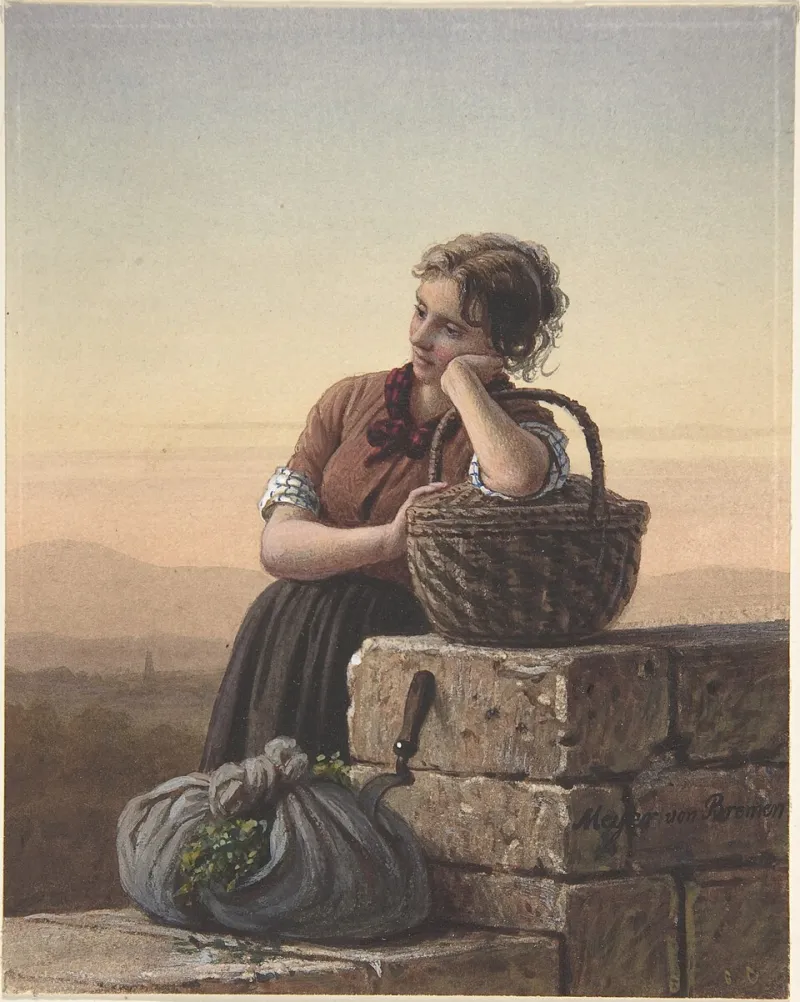
Photo: Johann Georg Meyer, CC0, via Wikimedia Commons
There's a particular kind of guilt that follows a creative person out of New Jersey. You leave because you have to — because the gallery density of Manhattan or the industry infrastructure of Los Angeles seems like the only logical next step. But somewhere between your first Brooklyn sublet and your third Los Angeles callback, something shifts. You start thinking about the art teacher in Trenton who saw something in you before anyone else did. You start missing the weird, specific energy of a basement show in Asbury Park or a pop-up in Newark's Ironbound district. And then, if you're one of a growing number of Jersey-born creatives, you start doing something about it.
Call it the diaspora effect. Across disciplines — visual art, theater, music, film, dance — artists who grew up in New Jersey and eventually migrated to major cultural hubs are looping back in ways that are quietly, meaningfully reshaping the state's creative ecosystem. Not by coming home permanently, but by staying connected in ways that didn't really exist a decade ago.
Why They Leave (And Why It's Not That Simple)
Let's be honest about the structural reality: New Jersey has historically struggled to retain its most ambitious creatives. The gravitational pull of New York City is literal and cultural — you can see the skyline from half the state. For a painter trying to break into serious gallery representation, or a playwright angling for a developmental residency, the calculus has long favored crossing the Hudson.
But that narrative, while real, leaves out a lot. Many artists who leave carry deep ambivalence about the decision. Jersey doesn't have the institutional weight of New York, sure — but it has community, affordability (relative to Manhattan, anyway), and a cultural texture that's genuinely its own. Artists who grew up in cities like Newark, Jersey City, Camden, or New Brunswick often describe a sense of creative debt to those places — a feeling that their voice was shaped by something specific about where they came from.
That feeling, it turns out, has traction.
The Mentorship Pipeline Nobody's Talking About
One of the most underreported developments in New Jersey's arts scene is the informal mentorship infrastructure being built by diaspora artists. Painters and photographers who've landed representation in Chelsea or Silver Lake are increasingly making themselves available to emerging artists back home — through studio visits, portfolio reviews, and social media mentorship that crosses state lines without anyone needing to buy a train ticket.
Youth arts programs in cities like Newark and Paterson have quietly started leveraging these connections. Program directors will tell you, if you ask, that some of their most valuable guest speakers and workshop facilitators are artists who now live in other states but maintain strong ties to the communities where they grew up. These aren't formal arrangements, mostly — they're built on relationships, on the sense that you owe something to the place that made you.
The digital shift that came with the pandemic accelerated all of this dramatically. What used to require a flight or a long drive can now happen over Zoom, and the resulting access has been genuinely democratizing for young artists in parts of New Jersey that rarely got face time with working professionals.
Money Talks: Funding and Investment From Afar
Beyond mentorship, some diaspora artists are putting actual resources back into the state. A handful of NJ-born creatives who've found financial footing in larger markets have begun contributing to local arts organizations, co-funding community gallery spaces, or underwriting residency programs in their home cities.
This isn't philanthropy in the traditional, top-down sense. It tends to be more personal, more targeted — an artist who grew up in Elizabeth contributing to a mural project there, or a filmmaker from Camden backing a youth media program in their old neighborhood. The amounts aren't always huge, but the signal they send matters. It tells local artists that their work is worth investing in, that someone who made it out still thinks the scene back home deserves to grow.
Some of this investment is also coming through collaborative projects. Jersey-born musicians who've built careers in Nashville or LA are recording with local artists, bringing visibility and distribution infrastructure that smaller NJ acts wouldn't otherwise have access to. Visual artists showing in major markets are curating group exhibitions that include Jersey-based peers — pulling them into conversations and collections they might never have entered on their own.
The Homecoming as Cultural Event
There's also something to be said for the occasional, intentional return. When a Newark-raised dancer who's been touring with a major contemporary company comes back to perform at a local venue, it's not just a concert — it's a statement. It says this place is worth coming back to. It says the audience here deserves the same quality of work you'd see in a major metro.
These homecomings, when they happen, tend to carry unusual emotional weight. There's a specificity to performing for the people who knew you before you were anybody, in the neighborhood where you first figured out who you wanted to be. Artists who've done it describe it as clarifying — a reminder of what the work is actually for.
And for younger artists in the audience, the effect can be formative. Seeing someone who looks like you, who came from where you came from, doing serious work at a serious level — that's the kind of visibility that changes what feels possible.
Cross-Pollination, Not Extraction
It's worth naming what makes this phenomenon different from the more familiar story of talent drain. The diaspora effect, as it's playing out in New Jersey, isn't about extraction — it's about cross-pollination. Artists aren't just taking what the state gave them and disappearing. They're metabolizing experiences from larger cultural ecosystems and feeding something back.
A photographer who moved to Los Angeles and spent five years shooting in a more conceptually rigorous environment brings a different eye when they collaborate with a Jersey-based artist. A theater director who's worked in Chicago's storefront scene comes back with dramaturgical frameworks that push local productions in new directions. The exchange runs both ways, and the NJ scene is richer for it.
What's emerging, slowly and without much fanfare, is something like a distributed creative network — one that doesn't require everyone to be in the same place at the same time. New Jersey is increasingly the hub of a web that extends outward into every major creative center in the country, connected by loyalty, memory, and a shared sense that the work started here matters.
What Comes Next
The question worth asking is whether this informal network can become something more durable. Right now, it runs largely on personal relationships and good intentions — which is beautiful, but fragile. Arts organizations in New Jersey have an opportunity to formalize some of these connections: to build diaspora advisory boards, to create structured mentorship pipelines, to develop residency programs that explicitly invite artists back into the communities they came from.
Some are already moving in that direction. Others are still figuring out how to make the ask. But the appetite is clearly there, on both ends of the exchange.
New Jersey has always had to make peace with its proximity to New York — with being, in the cultural imagination of the country, the place next door. But the diaspora effect suggests a reframe: maybe the artists who leave aren't lost to the scene. Maybe they're just the part of it that's operating at a distance, sending signals back, keeping the frequency alive.
That's not a consolation prize. That's a network. And networks, when they're built on something real, tend to compound.