Hands-On and Hustling: How Jersey's Makers Are Skipping the Gallery and Going Straight to the People
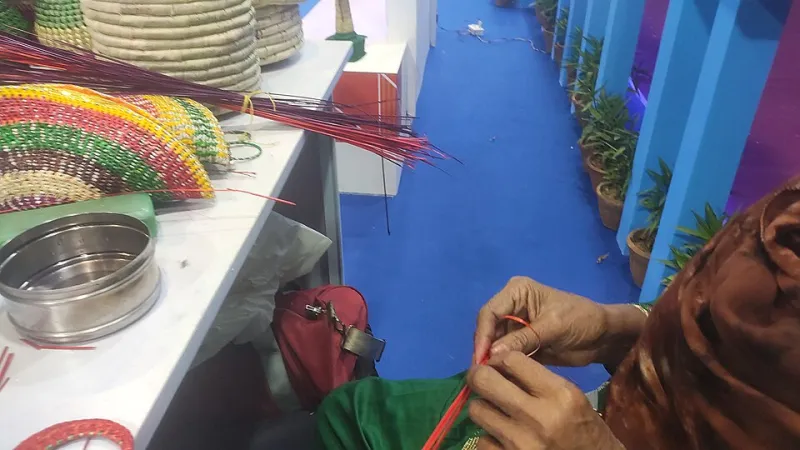
Photo: Goutam1962, CC BY-SA 4.0, via Wikimedia Commons
There's a particular kind of Saturday morning energy at the Asbury Park Bazaar — the kind where you can smell beeswax candles and fresh-cut cedar before you even find parking. Tables overflow with hand-thrown mugs, silver-hammered earrings, block-printed tote bags, and cutting boards that look too beautiful to actually use. The people behind those tables aren't hobbyists. They're professionals. And increasingly, they're choosing this — the folding tent, the Square reader, the face-to-face transaction — over the white-walled gallery that once represented the gold standard of artistic legitimacy.
Across New Jersey, a quiet but unmistakable shift is happening in the maker community. Skilled artisans are opting out of the traditional gallery pipeline and building their careers through craft fairs, curated pop-ups, online storefronts, and direct community relationships. It's not a retreat from ambition. If anything, it's the opposite.
The Gallery Dream — and Why So Many Are Walking Away From It
For decades, the gallery system was the path. You built a portfolio, you courted representation, you waited. If you were lucky, a gallery took 40 to 50 percent of every sale, controlled your pricing, dictated exhibition schedules, and decided which collectors even got to see your work. For painters and sculptors working in certain fine art traditions, that system still has its place. But for makers — the ceramicists, the textile weavers, the leatherworkers, the jewelers — it often felt like a door that was never really built for them.
"Galleries have historically treated craft as the lesser cousin of fine art," says Dani Okafor, a Montclair-based ceramicist who spent three years trying to break into the gallery circuit before pivoting entirely to markets and her own studio sales. "There's this hierarchy where a painting on a wall is 'art' and a bowl I spent forty hours on is somehow just a 'craft object.' I got tired of that conversation."
Okafor now sells almost exclusively through a combination of regional craft fairs — including the beloved Jersey City Art & Studio Tour and the annual Crafty Bastards-style markets popping up in towns like Lambertville and Collingswood — plus her own website and a loyal Instagram following she's cultivated over five years. Last year was her most profitable to date. She kept every dollar she earned.
The Economics of Cutting Out the Middleman
The math, when you lay it out, is pretty compelling. A gallery commission typically runs between 40 and 60 percent. A booth at a well-attended craft market might cost anywhere from $75 to $400 for the day, depending on the event. For an artisan moving $1,500 to $3,000 in product over a weekend — which is entirely realistic for established makers at quality markets — that's a radically better margin.
But it's not just about the cut. It's about control.
Marcus Telles, a woodworker based out of Rahway who specializes in live-edge furniture and hand-carved home goods, describes the shift as reclaiming authorship over his own business. "When you're at a market, you're the one telling your story. You explain how the piece was made, where the wood came from, why you chose this joint over that one. Customers connect with that. They're not buying a product — they're buying into a relationship with the person who made it."
Telles started doing pop-ups three years ago after growing frustrated with consignment arrangements that left his work sitting in storage for months. Now he runs a waitlist for custom commissions and regularly sells out at the New Brunswick Arts Market. He's also part of a loose collective of Jersey woodworkers and furniture makers who cross-promote each other's work and share booth space at larger regional events — a model that cuts costs while building community.
Pop-Ups as Cultural Infrastructure
One of the more interesting developments in Jersey's maker scene is how pop-up markets have evolved from occasional novelties into genuine cultural infrastructure. Events like the Trenton Punk Rock Flea Market (which, despite the name, has always featured serious makers alongside vintage dealers), the Morristown Makers Market, and the growing constellation of holiday craft fairs across Bergen and Essex counties have become reliable economic engines for artisans who treat them as anchor events in their annual calendars.
Curators and organizers behind these events are increasingly intentional about who they invite. Many have developed applications that prioritize handmade work, original design, and local production — pushing back against the mass-produced imports that have diluted some national craft fair circuits.
"We turn away probably sixty percent of applicants," says Kezia Hartmann, who co-organizes a quarterly maker market in Hoboken that's become a fixture in the Hudson County arts calendar. "The whole point is to create a space where people can encounter genuinely made things. When you hold that standard, the customers notice. They come back. They bring their friends."
For artisans, that curation matters. Being accepted into a respected market is its own form of validation — one that comes with actual revenue attached.
Textile Artists and Jewelers Leading the Charge
If ceramicists have become the poster children for the direct-sales movement, textile artists and independent jewelers aren't far behind. Both disciplines have long occupied an awkward middle ground between fine art and functional object — too craft-forward for many galleries, too labor-intensive and skill-driven to be dismissed as hobby work.
Sienna Park, a surface pattern designer and natural-dye textile artist working out of a shared studio in Paterson, sells her hand-dyed scarves, wall hangings, and yardage almost entirely through a combination of pop-ups and her Etsy shop, which she supplements with a small but devoted newsletter list. She's tried the gallery route twice. Both times, she says, her work sold well but she walked away feeling like a vendor rather than a collaborator.
"The direct relationship with buyers changed everything for me creatively," Park explains. "When someone tells me they bought my piece because the indigo reminded them of their grandmother's sari, that's information I carry into the next collection. The gallery experience doesn't give you that feedback loop."
Democratizing the Definition of 'Working Artist'
Maybe the most significant thing about this grassroots shift is what it's doing to who gets to identify as a working artist in New Jersey. The gallery system, for all its cultural cachet, has always had significant barriers — geographic, financial, social, and often racial. Breaking into representation in a major market like New York or even Newark requires access to networks that aren't evenly distributed.
Craft markets and community pop-ups lower those barriers considerably. A first-generation maker without gallery connections, without a fine arts MFA, without a network of collectors — they can set up a table, show their work, and start building a customer base on the same weekend as someone with a decade of gallery experience. That's not nothing. That's actually kind of radical.
"I didn't go to art school," says Okafor. "I learned to throw on YouTube and in a community studio in Newark. Five years ago I would have told you I wasn't a 'real' artist because no gallery had told me I was. Now I have a waiting list and I've stopped asking for permission."
The Garden State has always had a complicated relationship with its own creative identity — forever in the shadow of New York, perpetually underselling its own depth and talent. But in church parking lots and repurposed warehouses and weekend farmers market annexes, Jersey's makers are building something that doesn't need a Manhattan zip code to matter. They're doing it with their hands, their hustle, and a Square reader. And honestly? The work speaks for itself.